Mulch prices vary more than most gardeners expect, and buying without a number in mind is a fast way to overspend. A single cubic yard of bulk hardwood mulch can cost as little as $25 in rural areas or push past $80 in high-demand urban markets - before delivery.
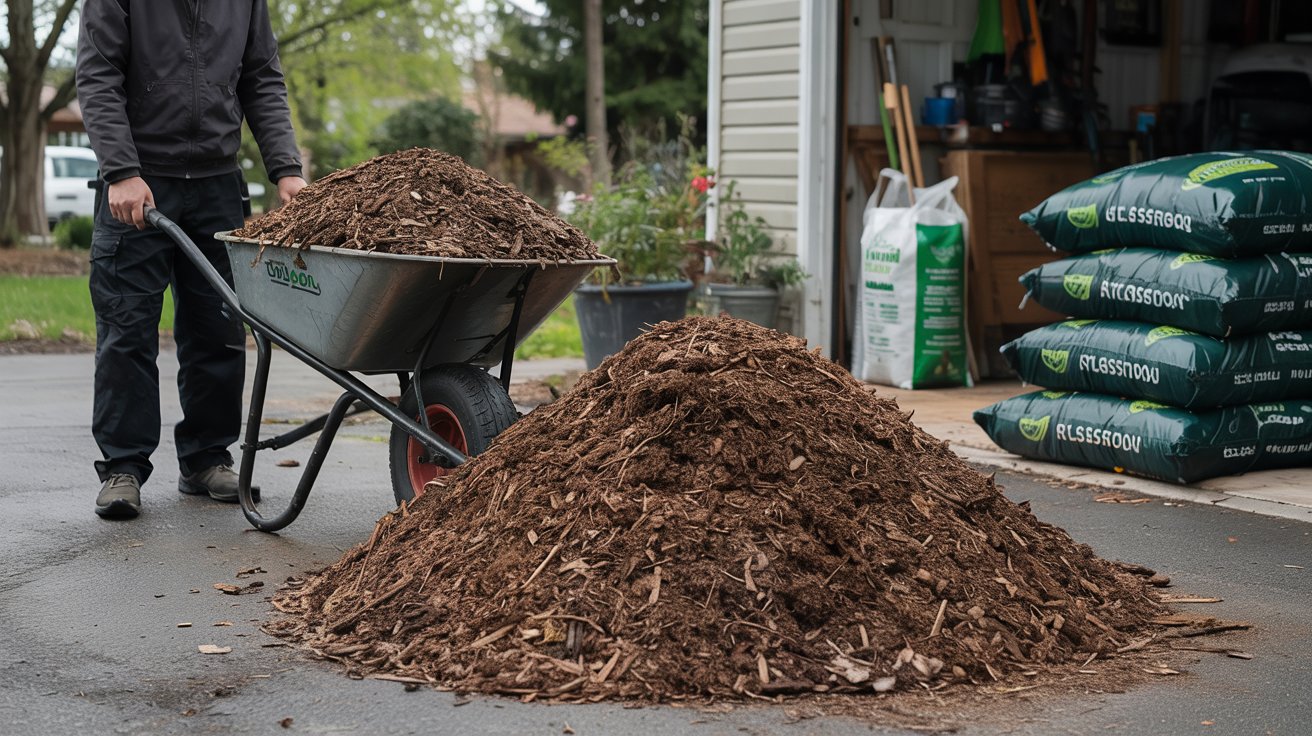
Knowing the format breakdown before you call a supplier keeps your landscape budget from running off the rails.
Bagged mulch from a home improvement store costs roughly $3-$7 per 2-cubic-foot bag. Bulk mulch ordered by the yard runs $25-$80 per cubic yard, and professional installation adds $20-$45 per cubic yard on top of that.
If your project covers more than three garden beds, bulk delivery almost always wins on price per cubic foot. Smaller jobs - a single bed or a quick top-dress - often make more sense from a bag.
We put together this guide so you can build a reliable mulch budget in under ten minutes. Prices shift by region, season, and mulch type, but the ranges here give you a solid anchor for any quote you receive.
For a broader look at choosing the right mulch type, we have a full rundown in our soil section.
The sections below cover bulk vs. bagged pricing, delivery and installation costs, and practical rules to avoid the most common buying mistakes.
Mulch costs range from $3–$7 per bag for bagged formats to $25–$80 per cubic yard for bulk. Delivery adds $50–$150 per load.
Professional installation runs $20–$45 per cubic yard. Format, mulch type, and region all move the final number significantly.
What Mulch Actually Costs: The Quick Numbers?
Most homeowners budget too low because they only price the mulch itself and forget delivery. A full project cost includes the mulch, any hauling fee, and labor if you're not spreading it yourself.
Remember it later
Planning to try this recipe soon? Save it for a quick find later!
Those three numbers added together are what you actually pay.
Bulk mulch ordered from a local landscape supplier runs $25-$80 per cubic yard depending on type and region. Dyed or color-enhanced mulch sits near the top of that range, while basic wood chip mulch or natural hardwood tends to come in lower.
According to a Forbes cost breakdown, full-service mulch installation including delivery lands between $100 and $300 for a typical residential project.
Bagged mulch costs more per cubic foot but requires no delivery fee and no minimum order. That math flips around 3 cubic yards - above that volume, bulk is almost always cheaper even after the delivery charge.
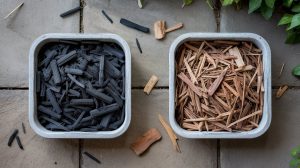
Color mulch - red, black, or brown dyed hardwood - costs $5-$10 more per cubic yard than undyed alternatives. The dye itself is the price driver, not any difference in wood quality or performance.
If color consistency matters to your landscape design, budget that premium in from the start.
To figure out how many cubic yards you need, multiply your bed's length by width by desired depth (in feet), then divide by 27. A 3-inch depth over 200 square feet works out to about 1.85 cubic yards - round up to 2 for a clean order.
If you're also weighing gravel as a ground cover option, those cost structures work differently and deserve a separate comparison.
Order 10% extra on any bulk delivery. Settling and irregular bed shapes almost always mean you run short. A half-yard shortage costs you a second delivery fee — far more than the extra mulch itself.
Bagged vs. Bulk: Price by Format
The format you buy in changes your per-cubic-foot cost dramatically. Bagged mulch is convenient but carries a retail markup.
Bulk mulch is raw material pricing, but the delivery minimum and hauling cost need to pencil out first.
A standard 2-cubic-foot bag costs $3-$7 at most home improvement stores. That works out to $40-$95 per cubic yard when you buy by the bag - well above bulk rates for any volume over a few yards.
Mississippi State Extension's landscape mulch guide points out that bulk purchasing almost always offers better value per unit once you cross a project threshold. Understanding hardwood vs. softwood differences also affects which bulk product makes sense for your beds.
Bulk pricing shifts by mulch type and by region. The University of Maine Extension's mulch publication notes that regional availability of wood waste and byproducts directly shapes local pricing - areas near lumber operations typically see lower bulk rates than coastal or urban markets.
| Mulch Type | Bagged (per 2 cu ft) | Bulk (per cu yd) |
|---|---|---|
| Basic Wood Chips | $3–$5 | $25–$40 |
| Hardwood Shredded | $4–$6 | $30–$50 |
| Dyed Color Mulch | $5–$7 | $40–$65 |
| Cedar/Cypress | $5–$7 | $45–$80 |
| Pine Straw (bales) | $4–$6/bale | $35–$55 |
| Rubber Mulch | $8–$12 | $80–$160 |
Cedar and cypress sit at the premium end of the natural wood range because of their natural insect-deterring oils. Rubber mulch costs the most upfront - often $80-$160 per cubic yard in bulk - but it doesn't decompose, so replacement costs drop sharply over time.
We break down the full rubber mulch vs. wood comparison if that trade-off matters for your project.
Pine straw is sold by the bale rather than by cubic yard or cubic foot, which makes direct comparison tricky. One bale covers roughly 35-50 square feet at a 2-3 inch depth.
In the Southeast where pine straw is abundant, bale prices drop to $3-$4 - northern markets pay more simply because of shipping distance.
The crossover point where bulk beats bagged typically falls around 3 cubic yards. Below that, the delivery fee erases the per-yard savings.
Above it, bulk wins almost every time - sometimes by 40-50% per cubic foot.
Prices in the Pacific Northwest and Northeast run 15–25% higher than the national midpoint due to higher labor costs and transport distance from timber regions. Always get a local quote before finalizing your budget.
Delivery and Installation: What to Expect
Delivery fees catch a lot of people off guard. Most landscape suppliers charge a flat delivery fee of $50-$150 per load regardless of yard count, so small orders get hit hardest on a per-yard basis.
A 2-yard delivery paying a $75 flat fee adds $37.50 per yard - that nearly doubles a $30/yard mulch price.
Ordering more per trip is the single most effective way to reduce your cost per cubic yard. Many suppliers set a minimum order of 2-3 cubic yards anyway, and some offer free delivery above a certain threshold - commonly 5 or more cubic yards.
Call before ordering and ask directly about that threshold.
Professional installation - spreading and light edging - typically adds $20-$45 per cubic yard to the project total. A Forbes mulch installation guide puts full-service jobs (mulch + delivery + labor) in the range of $100-$300 for average residential beds, with larger or heavily landscaped properties running $500 or more.
If you're doing the spreading yourself, you keep that labor margin - but factor in your own time on big loads.
Many municipalities offer free wood chip mulch from tree-trimming operations. Volume is unpredictable and quality varies, but for large naturalized areas or back beds, free municipal chips can cut your materials cost to zero.
Timing affects price more than most buyers realize. Spring is peak demand - landscape crews and homeowners all buy at once, and suppliers raise prices accordingly.
Late summer and fall purchases often land 10-20% lower, and some suppliers discount end-of-season inventory heavily in October and November. If your project isn't spring-critical, waiting saves real money.
Regional price volatility is normal and worth expecting. Urban markets near major metro areas pay more for labor and fuel surcharges.
Rural areas with nearby sawmills or wood recyclers often see bulk wood chip prices well below the national range. Getting two or three local quotes takes 15 minutes and regularly surfaces a 20-30% spread between suppliers in the same area.
Also factor in whether you're comparing mulch against alternatives - our look at mulch versus rock landscaping covers long-term cost differences between the two approaches.
If you're managing a mulch application for garden beds, depth matters for your cost estimate - 2 inches for weed suppression, 3-4 inches in areas with heavy summer heat. More depth means more cubic yards, which changes your delivery math.
You can also compare weed barrier vs. mulch if you're deciding whether to use fabric underneath, since that affects total labor and material costs too.
Do's and Don'ts When Buying Mulch
Most mulch budget mistakes come down to three things: buying the wrong format for the project size, skipping the volume math, and not asking about delivery terms upfront. Avoiding those three covers the bulk of overspending.
Mississippi State Extension's landscape budgeting guidance recommends calculating cubic yards before contacting any supplier - not after. That one step stops you from being upsold on volume you don't need.
The University of Maine Extension's regional mulch research reinforces that local wood availability is the biggest driver of bulk price, so sourcing locally almost always beats ordering specialty mulch shipped from a distance. For soil amendment decisions alongside mulch, the perlite vs. vermiculite breakdown is worth reading if you're working beds that need drainage help too.
- Calculate cubic yards first. Measure bed dimensions and multiply length × width × depth (in feet) ÷ 27 before calling any supplier.
- Buy bulk above 3 yards. For projects over 3 cubic yards, bulk delivery almost always costs less per cubic foot than bagged retail, even after the delivery fee.
- Ask about free delivery thresholds. Many suppliers waive the delivery charge above 5 cubic yards - one question saves $50-$150.
- Buy in fall or late summer. Off-peak pricing runs 10-20% lower than spring rates at most landscape suppliers.
- Get three local quotes. Price spreads of 20-30% between local suppliers are common for identical products.
- Don't skip delivery math. A $75 flat delivery fee on a 2-yard order adds $37.50/yard - nearly doubling the mulch price itself.
- Don't overbuy color mulch. Dyed mulch costs $5-$10 more per cubic yard; use it only in visible front beds where color consistency matters.
- Don't ignore mulch quality. Mulch with a sour smell indicates anaerobic fermentation - it can burn plant roots and should be avoided.
- Don't buy bagged for large jobs. Paying retail bag prices on a 5-yard project can cost 40-50% more than the same volume in bulk.
One often-missed check: confirm whether your driveway or access point can handle a bulk delivery truck. Most landscape trucks need a 10-foot clearance and won't dump on steep grades.
A failed delivery attempt can cost a re-delivery fee on top of the original haul charge. If you're also budgeting other outdoor projects, comparing sod installation costs alongside mulch helps prioritize where to spend first.
Frequently Asked Questions
Bulk mulch runs $25–$80 per cubic yard in 2026, with basic wood chips at the low end and cedar or dyed color mulch at the high end. Urban markets typically pay 15–25% more than rural areas.
One cubic yard equals 27 cubic feet, so it takes roughly 13–14 standard 2-cubic-foot bags to equal one cubic yard of bulk mulch.
Yes, above about 3 cubic yards, bulk mulch typically costs 40–50% less per cubic foot than bagged retail, even after a $50–$150 delivery fee is factored in.
Yes. Dyed color mulch (red, black, or brown) costs $5–$10 more per cubic yard than undyed hardwood mulch. The dye process drives that premium, not any difference in wood quality.
Multiply bed length × width × depth in feet, then divide by 27 to get cubic yards. A 200-square-foot bed at 3-inch depth needs roughly 1.85 cubic yards — order 2 to account for settling.
Pin it for your next how much does mulch cost? project.