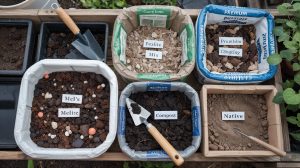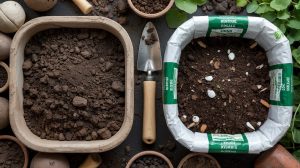
Most gardeners have stood in the fertilizer aisle, staring at a 50-pound bag of synthetic 10-10-10 next to a smaller bag of composted manure, wondering if the price difference is actually worth it. The answer isn't simple - and it shouldn't be.
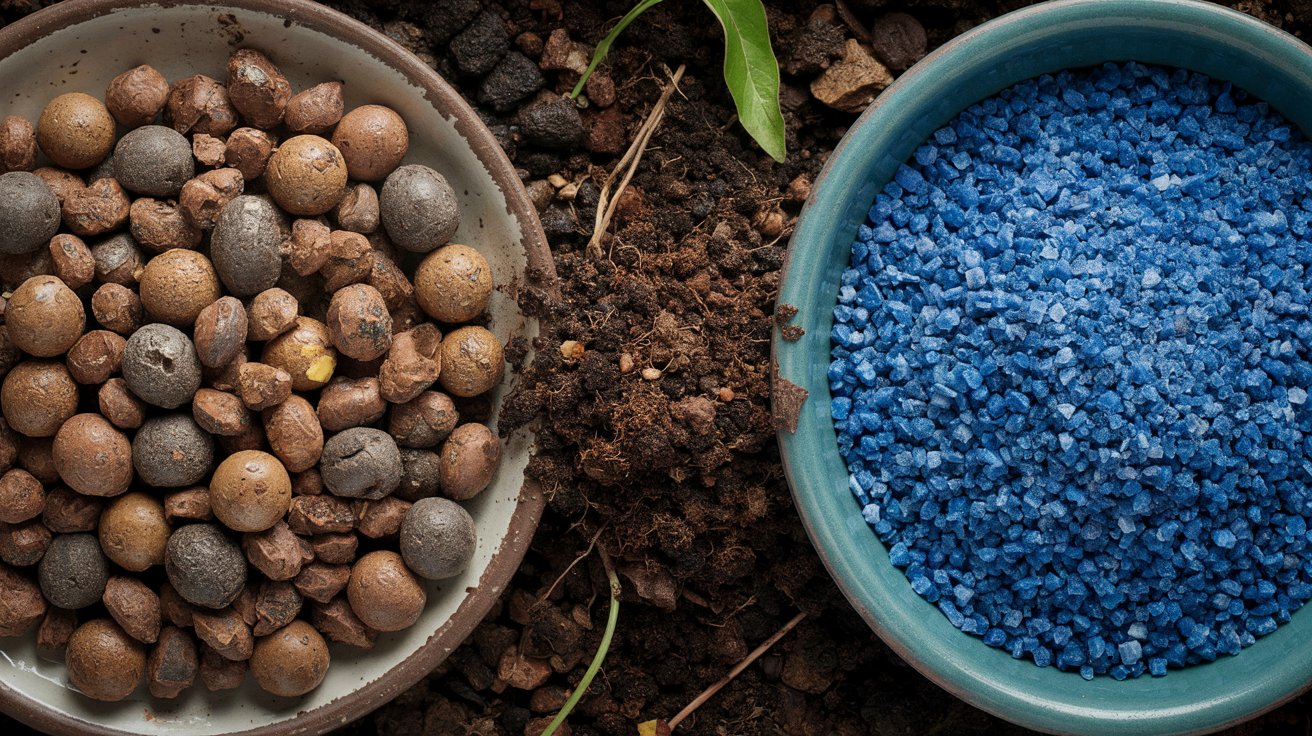
Each type feeds your plants through a completely different mechanism, and choosing wrong can cost you money, soil structure, or both.
Synthetic fertilizers deliver nutrients fast. Organic fertilizers feed your soil over time.
That distinction sounds small, but it shapes every decision: when to apply, how much to spend, and what your soil looks like five years from now. Understanding soil organic matter and nutrient cycling is the foundation for making that call correctly.
You'll finish this article with a clear, use-case decision guide - whether you're managing a lawn, a raised vegetable bed, or a combination of both.
Synthetic fertilizers deliver fast, precise nutrients at lower upfront cost. Organic fertilizers build soil health long-term through microbial activity and organic matter.
For most home gardens, a mixed approach outperforms either used alone.
Executive Verdict: Organic vs Synthetic Fertilizer
If your lawn is yellowing in July or your tomatoes stalled out mid-season, a synthetic fertilizer fixes that fast. University of Minnesota Extension confirms that inorganic fertilizers provide rapid nutrient delivery at high concentrations - exactly what a struggling plant needs right now.
Remember it later
Planning to try this recipe soon? Save it for a quick find later!
But fast isn't always better. Organic fertilizers release nutrients more slowly, driven by microbial breakdown in the soil, which means the timing of availability aligns more naturally with plant growth cycles.
The verdict depends on your timeline and goal. A lawn renovation needs quick-release nitrogen.
A vegetable garden you plan to grow in for the next decade needs organic matter and microbial support, which only organic inputs reliably provide.
Colorado State University Extension notes that organic fertilizer benefits include improved soil organic matter and sustained microbial activity - outcomes synthetic fertilizers simply don't replicate. For homeowners who want to choose the right lawn fertilizer, the organic vs. synthetic question is often the starting point.
Run a soil test before buying anything. A $15–$25 test from your local extension office tells you exactly which nutrients are deficient, so you don't overspend on nutrients you already have.
How Organic and Synthetic Fertilizers Work?
Every fertilizer - organic or synthetic - carries a guaranteed N-P-K analysis on the label. That number tells you the percentage of nitrogen, phosphorus, and potassium by weight.
What it doesn't tell you is how fast those nutrients become available to your plants, or what happens to your soil after application.
Organic fertilizers are carbon-based materials - bone meal, blood meal, fish emulsion, composted manure - and they release nutrients only after soil microbes break them down.
As the Colorado State organic fertilizer guide explains, this process also increases soil organic matter and microbial populations, which compounds over time.
Synthetic fertilizers skip the biology entirely. Nutrients are already in plant-available form - typically water-soluble nitrate or ammonium - so roots absorb them within days of application.
Minnesota Extension's fertilizer guide notes that while all fertilizers carry a guaranteed analysis, organic and inorganic sources differ fundamentally in availability and release timing.
| Factor | Organic | Synthetic |
|---|---|---|
| Nutrient form | Bound in organic compounds | Water-soluble salts |
| Release trigger | Soil temperature + microbial activity | Water / irrigation |
| N-P-K range | Low, variable (e.g., 3-2-2) | High, precise (e.g., 10-10-10) |
| Soil OM impact | Positive, builds over time | None |
| Salt index | Low | Higher — burn risk if over-applied |
| Microbial response | Feeds and grows populations | Neutral to slightly suppressive |
| Application volume | Higher volume needed | Small volumes sufficient |
Soil temperature matters more than most gardeners realize. Organic fertilizers are nearly inactive in cold soil below 50°F because microbial activity stalls.
In spring, this means an organic application in March may not release meaningful nutrients until May.
That's not a flaw - it's a feature in some contexts. If you're building soil for a raised bed, the slow release matches plant demand through the growing season without risk of burning roots.
For comparing soil amendment options, raised bed soil performance depends heavily on how much organic matter is present from the start.
In cold climates (Zones 3–5), organic fertilizers applied in early spring may sit inert for 4–6 weeks. Time your application for when soil consistently hits 55°F to get reliable release. In warm climates (Zones 8–11), organics release faster and may need more frequent monitoring.

Soil Health, Yield, and Environmental Impacts
Soil isn't just a growing medium - it's a living ecosystem. Every fertilizer decision either supports or disrupts that system.
Organic matter supports water retention, aeration, and the microbial networks that make nutrients available to plants in the first place.
Synthetic fertilizers feed the plant directly but largely bypass the soil ecosystem. Over years of exclusive synthetic use, soil organic matter can decline, microbial diversity drops, and you become more dependent on external inputs to maintain the same yield.
The University of Florida IFAS research shows that inorganic fertilizers can have higher salt indices, which damages microbial populations and risks root burn when over-applied.
- Builds long-term soil structure and water-holding capacity
- Feeds beneficial microbes and earthworms
- Low runoff and leaching risk due to slow release
- Reduces fertilizer dependency over multiple seasons
- OMRI-certified options safe for certified organic gardens
- Corrects deficiencies fast — results visible within a week
- Precise N-P-K ratios match exact soil test recommendations
- Lower cost per pound of actual nutrient delivered
- Works in cold soil where organics can't release
- Smaller application volumes required per treatment
Environmental runoff is the most serious risk with synthetic fertilizers. When water-soluble nitrogen reaches waterways, it triggers algae blooms and depletes oxygen - a process called eutrophication.
University of Maryland Extension warns that excess fertilizer pollutes water, and that organic amendments can reduce long-term input needs when applied correctly.
| Impact Area | Organic | Synthetic |
|---|---|---|
| Nitrogen leaching | Low | High if misapplied |
| Phosphorus runoff | Low to moderate | Moderate to high |
| Soil acidification | Minimal | Possible with ammonium forms |
| Groundwater risk | Low | Higher with sandy soils |
| Carbon contribution | Adds carbon | None |
For lawns specifically, the runoff risk is highest on sloped turf after heavy rain. If your lawn drains toward a storm drain or creek, slow-release organic or coated synthetic granules significantly reduce that risk.
Understanding mulch layering costs can also factor into a complete organic soil program, since mulch reduces the need for fertilizer by moderating soil temperature and retaining moisture.
Cost, Availability, and Practical Guidelines
Organic fertilizers cost more per application - but the comparison isn't always fair when you only look at sticker price. A synthetic 46-0-0 urea product might cost $0.50 per pound of nitrogen.
A quality organic like feather meal at 12-0-0 can run $3-$5 per pound of nitrogen. That gap is real.
However, Maryland Extension notes that organic fertilizer applications build soil health and can reduce long-term input requirements - meaning you may apply less over time.
Minnesota Extension reinforces that synthetic fertilizer analysis is precise and cheaper per unit of nutrient upfront, while organics trade that for soil health returns that compound over seasons.
Availability is rarely a limiting factor. Both types are sold at every garden center and big-box store.
OMRI-certified organic options - verified safe for certified organic production - are slightly harder to find in rural areas but widely available online.
| Situation | Best Choice | Reason |
|---|---|---|
| Lawn yellowing mid-season | Synthetic quick-release | Results in 3–5 days |
| New vegetable garden bed | Organic + compost | Builds soil for years ahead |
| Established perennial border | Organic granular | Low-maintenance, season-long feeding |
| Container plants | Synthetic liquid or slow-release | Limited soil volume needs precision |
| Sandy soil, near water | Organic or coated synthetic | Reduces leaching risk significantly |
| Cold spring soil (below 50°F) | Synthetic only | Organics can't release in cold soil |
For most home landscapes, the smartest move is a hybrid program: organic as your base (compost, slow-release granulars) with synthetic spot-treatments when a plant shows clear deficiency symptoms. This approach cuts total synthetic use by 40-60% while maintaining the flexibility to respond quickly when needed.
Pairing the right soil amendments with fertilizer choices is easier when you understand topsoil vs garden soil differences before you build your beds.
If you're managing a mixed landscape, think about each zone separately. Lawn areas can tolerate synthetic inputs more than vegetable beds, where soil biology directly affects food quality and flavor.
For gardeners weighing all soil inputs, perlite vs vermiculite choices also feed into the same decision about drainage and nutrient retention. And when mulching your beds, check out organic mulch material options - they contribute slow organic matter over time the same way an organic fertilizer does.
Never apply synthetic fertilizer to drought-stressed plants. High salt concentrations in dry soil pull water out of roots rather than delivering nutrients, making stress worse. Water thoroughly before and after any synthetic application.
When budgeting a full soil program, factor in mulching your garden beds as a companion practice - it reduces moisture loss and moderates the soil temperature that controls organic nutrient release.
For container and potting situations, potting soil nutrient capacity changes how much and how often you'll need to fertilize at all.

Frequently Asked Questions
"Natural" has no regulated definition; "organic" fertilizers meet specific standards and are often OMRI-certified. All organic fertilizers are natural, but not all natural fertilizers qualify as certified organic.
Organic lawn fertilizers reduce runoff risk and build soil over time, but won't fix deficiencies as quickly. For most lawns, a slow-release organic program with occasional synthetic spot-treatment gives the best results.
Apply compost at 1–2 inches per season alongside organic granular fertilizers. Colorado State Extension confirms organic sources consistently increase soil microbial activity and organic matter content over multiple growing seasons.
Yes — mixing is safe and often effective. Use organic as your base application and synthetic only when a soil test shows a specific deficiency that needs fast correction. Avoid doubling up on nitrogen.
A soil test is strongly recommended. Minnesota Extension confirms it helps you tailor the organic-to-synthetic balance for your specific site, avoiding both deficiencies and over-application that wastes money and risks water pollution.
Pin it for your next organic vs synthetic fertilizer project.