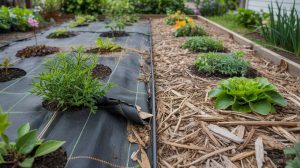
The mulch you lay down on a playground or garden bed does more than look tidy - it sets the terms for safety, soil health, and how much weekend work you're signing up for.
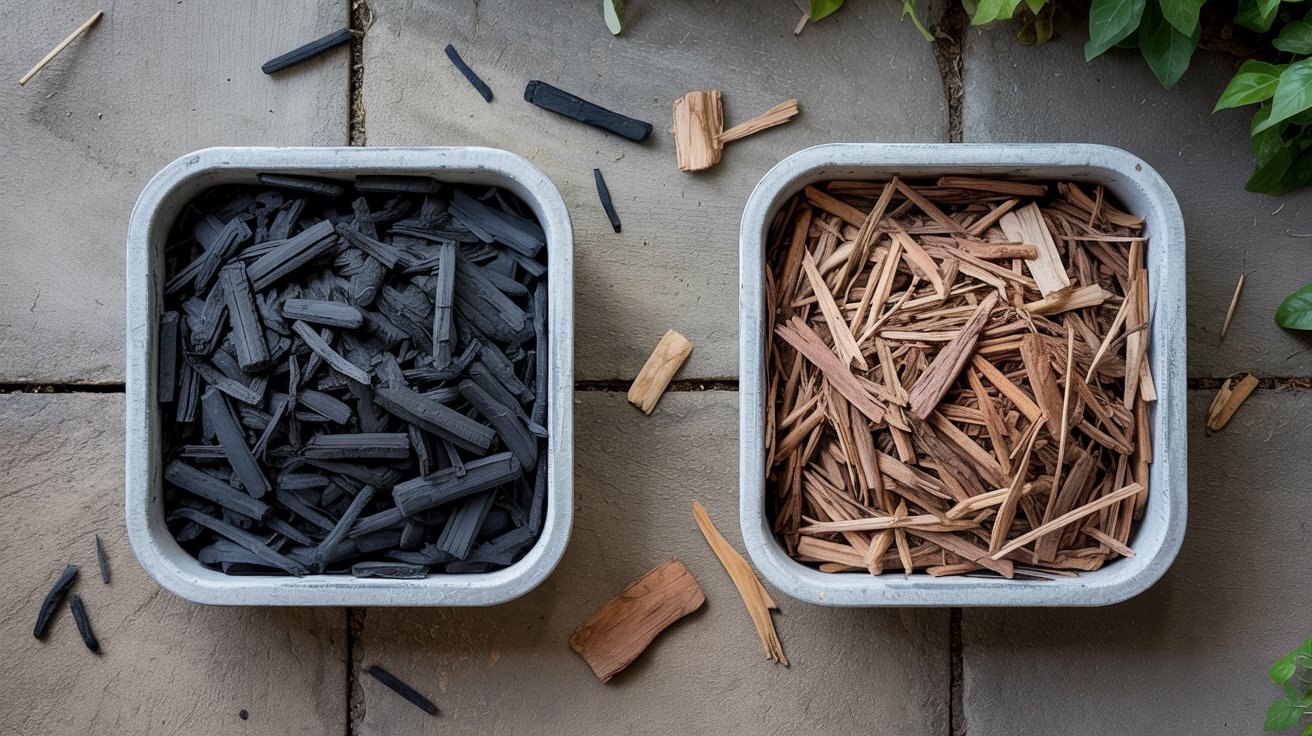
Rubber mulch and wood mulch each have a loyal following, and both have real merits.
But they behave very differently underfoot, in the soil, and in your wallet over a ten-year span. If you're picking material for a school playground, a backyard play area, or a flower bed, those differences matter a lot.
The comparison below draws on federal agency data and real cost figures - not manufacturer claims - so you can match the right material to your actual situation.
If you're still sorting out your mulch material questions, the overview section covers the wider landscape before you commit to one product.
Rubber mulch lasts 10+ years, costs more upfront, and suits high-traffic playgrounds but raises chemical concerns. Wood mulch breaks down in 2-3 years, improves soil, costs less initially, and carries no chemical risk — making it the safer default for gardens and most residential yards.
Direct Head-to-Head: Rubber Mulch vs Wood Mulch
Side by side, these two materials almost couldn't be more different in how they interact with your yard, your kids, and the long-term condition of your soil.
Remember it later
Planning to try this recipe soon? Save it for a quick find later!
Rubber mulch - usually made from shredded recycled tires - is engineered for cushioning and longevity. Wood mulch, whether bark chips, shredded hardwood, or wood shavings, is an organic material that feeds the soil as it breaks down.
Those fundamental differences drive every practical comparison below.
The safety picture for rubber mulch is genuinely unsettled. A EPA federal action plan on recycled tire crumb rubber found limited scientific literature on health outcomes and explicitly called for further risk assessment before drawing firm conclusions.
That doesn't mean rubber mulch is proven dangerous. It means the data isn't settled yet, which is a meaningful distinction when choosing surfaces for children.
Wood mulch carries no equivalent chemical question mark. For landscaping and garden beds, it also wins on soil biology - decomposing wood chips feed fungi, earthworms, and the microbial communities that keep soil productive.
If you're already thinking about weed suppression outcomes alongside soil health, wood mulch pulls double duty more naturally than rubber.
On heat, rubber mulch is a real liability in hot climates. Surface temperatures on rubber playground surfaces can exceed 160°F on sunny summer days, posing burn risk for bare-skinned children.
Wood mulch surfaces typically run 20-30°F cooler under the same conditions.
Rubber mulch surface temperatures can reach dangerous levels on sunny days in warm climates. Always check surface temp before letting young children play barefoot on rubber-mulched areas — especially in USDA zones 7 and above.
Costs, Durability, and Maintenance
Upfront cost is where rubber mulch looks appealing at first glance. The long-term math is more complicated, and the total cost picture depends heavily on how often you'd otherwise be replacing wood mulch.
Bulk wood mulch runs roughly $25-$50 per cubic yard for material alone, while shredded rubber mulch typically costs $80-$160 per cubic yard. Installed prices per square foot vary by region, but rubber consistently runs 3-4x the upfront cost of wood.
You can calculate mulch budget totals using square footage and depth to compare your actual numbers.
Where rubber earns back some of its premium is in replacement frequency. Wood mulch needs a fresh 1-2 inch top-up every 1-2 years, and a full replacement every 3-4 years in most climates.
Rubber mulch, by contrast, can last 10-15 years with minimal replenishment.
The Wisconsin Department of Health Services notes in its guidance that health concerns remain uncertain for rubber tire products, and suggests that some parents and officials may reasonably prefer wood mulch in the absence of definitive risk data - especially for younger children with more frequent ground contact.
That Wisconsin DHS health guidance is a useful reference for school purchasing committees weighing these trade-offs.
| Factor | Rubber Mulch | Wood Mulch |
|---|---|---|
| Material lifespan | 10–15 years | 2–4 years (gardens) |
| Annual top-up needed? | Rarely | Yes, 1–2 inches/year |
| Soil nutrients added? | None | Yes, over time |
| Recommended play depth | 6 inches (CPSC) | 6–12 inches (CPSC) |
| Displacement risk | Low | Moderate |
| 10-year cost estimate | $80–$200/cy once | $75–$200/cy total |
On playground fall zones specifically, the CPSC playground safety handbook specifies that rubber mulch requires a minimum installed depth - often cited at 6 inches - to meet fall-attenuation safety standards.
It also cautions that not all rubber products are tested, meaning buyers should verify ASTM F1292 compliance for any rubber product used under play equipment.
Wood mulch maintenance has one underrated advantage: it improves the soil beneath it over time. As chips break down, they feed microbial activity and slowly amend even compacted ground.
For garden beds around shrubs - like those around boxwood root zones, which benefit from consistent moisture retention - that slow decomposition is a feature, not a flaw.
When comparing 10-year costs, rubber mulch often comes close to or matches wood mulch costs when you factor in repeated wood top-ups. The financial case for rubber is strongest on large playgrounds, weakest on small garden beds where annual wood mulch bags cost very little.
For garden applications, you can also apply mulch correctly to maximize the decomposition benefit - depth and placement relative to plant crowns both affect how well wood mulch performs over a season.

Decision Toolkit: When to Use Rubber or Wood Mulch
Choosing between these two materials comes down to four questions: where it's going, who uses it, what your climate does in summer, and how much you want to spend upfront. Walk through these steps to land on a clear answer.
If you're also weighing whether mulch is even the right material - versus rock or other ground covers - it's worth checking the mulch vs rock trade-offs before committing to either organic or rubber product.
If you're installing rubber mulch on a school playground, request the product's Safety Data Sheet and ASTM test results from the supplier before signing a purchase order. Compliant products will have this documentation readily available.
For most residential homeowners, this framework lands on wood mulch for nearly every application except a dedicated backyard swing set or play structure. If you want to compare how different wood mulch types stack up against each other before buying, choosing between hardwood and softwood covers the key differences in decomposition rate and cost.
And for a broader grounding in mulch depth, layering, and soil biology, the fundamentals apply to both material types regardless of which you choose.
Schools and municipalities have one additional consideration: documented liability. Using CPSC-compliant, tested materials matters beyond safety alone - it shapes how institutions defend decisions if an injury occurs.
The compost and organic matter cycle is a useful companion topic for facilities managers thinking long-term about what happens to the soil beneath their play surfaces over years of use.
For wood mulch in fenced yard areas, the same durability thinking that applies to long-term material decisions applies here - organic materials need recurring maintenance budgets built in from the start.
Frequently Asked Questions
The EPA's federal action plan found limited safety data on recycled tire crumb rubber, leaving the question open. Most health agencies suggest wood mulch as the more cautious choice for young children with frequent ground contact.
Rubber mulch costs $80–$160 per cubic yard uninstalled; wood mulch runs $25–$50 per cubic yard. Over 10 years, total costs often converge once wood top-ups are factored in.
The CPSC recommends a minimum 6-inch depth for rubber mulch under play equipment and requires ASTM F1292 fall-attenuation compliance. Not all rubber products are tested, so always verify documentation before buying.
Yes. Rubber mulch adds no organic matter and may leach zinc and other compounds over time, potentially altering soil pH. Wood mulch actively improves soil structure and feeds beneficial microbes as it decomposes.
Rubber mulch does not attract termites, fungus gnats, or wood-boring insects since it contains no organic material. Wood mulch can harbor insects if left undisturbed for extended periods, but regular raking prevents most issues.
Pin it for your next rubber mulch vs wood mulch project.