Picking a garden hose sounds simple until you're standing in the aisle staring at 40 options with no clear way to compare them. Rubber, expandable, reinforced vinyl - the labels blend together fast.
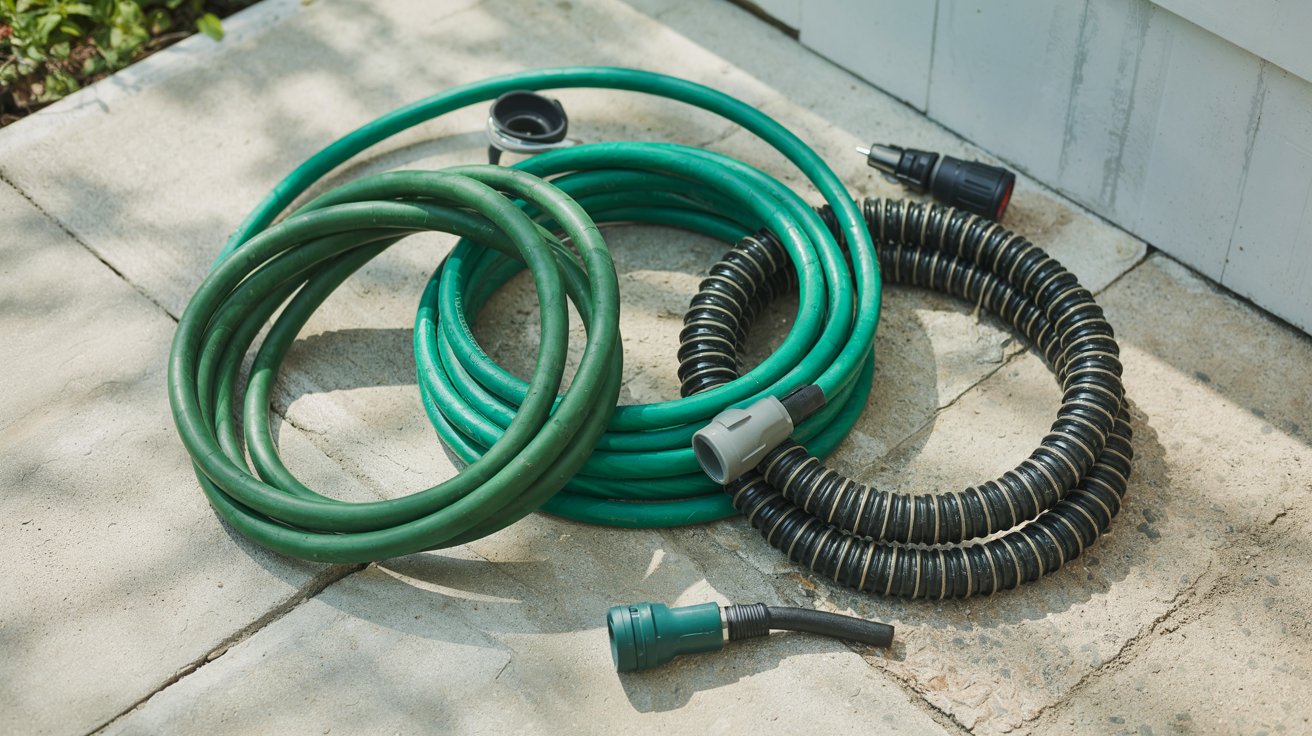
The hose that works on a third-floor balcony is completely wrong for a quarter-acre yard with a distant spigot. Yard size and water pressure are the two variables that narrow the field before price even enters the picture.
A cheap hose that kinks every three feet will cost you more in frustration - and replacement - than a mid-range rubber hose you buy once and use for a decade. Spending $10 less upfront rarely pays off here.
We've pulled guidance from university extension research and tested the market for summer watering routines to build a straightforward framework. Read this once and you'll know exactly what to buy.
The best garden hose for most yards is a ⅝-inch rubber or reinforced hose in a length matched to your yard. Expandable hoses suit small spaces; rubber wins on durability for larger yards.
Soaker hoses work best in fixed beds alongside a drip irrigation setup.
Key Specs: Materials, Length, and Fittings
Before comparing products by brand, you need to understand the four specs that actually determine whether a hose is worth buying: material, length, diameter, and fitting type. Getting one of these wrong means returning the hose or tolerating a frustrating tool every time you water.
Remember it later
Planning to try this recipe soon? Save it for a quick find later!
According to WSU Extension hose guidance, the two most common diameters are ⅝ inch and ¾ inch, with lengths typically running from 25 to 100 feet. The ⅝-inch diameter handles most residential yards at standard city water pressure.
The ¾-inch diameter delivers more volume per minute - useful if you're running multiple attachments or irrigating large beds.
Material is where most buyers make mistakes. Oregon State Extension notes that rubber and reinforced PVC hoses offer better flexibility and longevity than basic vinyl.
Rubber hoses handle heat without softening and resist cracking in cold better than any other material.
Vinyl hoses are the lightest and cheapest option, but they kink easily and degrade quickly in UV exposure. Reinforced PVC - often labeled "multi-layer" - sits in the middle: lighter than rubber, more durable than basic vinyl, and kink-resistant enough for most home use.
- Brass fittings: The standard for durability. They resist corrosion, grip threads cleanly, and rarely crack under pressure. Worth the small price premium over plastic fittings.
- Aluminum fittings: Lighter than brass and decent for moderate use, but can corrode faster in coastal or hard-water environments.
- Plastic fittings: Only acceptable on a hose used once a month. They strip easily and crack at temperature extremes.
- Kink resistance: Look for a hose marketed with a coil reinforcement layer or radial twist construction. These physically resist the bending radius that causes kinks.
Expandable hoses use a latex inner tube that swells under pressure to roughly three times its resting length.
They're extremely light when empty - some 50-foot models weigh under 2 lbs - but the latex tube is their weak point and typically lasts 2-4 seasons with normal use.
| Hose Type | Typical Length | Diameter | Fitting Type | Avg. Lifespan |
|---|---|---|---|---|
| Rubber | 25–100 ft | ⅝ in or ¾ in | Brass | 10–15 years |
| Reinforced PVC | 25–75 ft | ⅝ in | Brass or Aluminum | 5–8 years |
| Vinyl | 25–50 ft | ½ in or ⅝ in | Plastic or Aluminum | 1–3 years |
| Expandable | 25–100 ft | Varies (latex core) | Plastic or Brass | 2–4 seasons |
| Soaker | 25–100 ft | ½ in | Plastic | 3–5 years |
Length matters more than most buyers realize. Running a 100-foot hose to water a 20-foot patio adds unnecessary weight and reduces water pressure at the nozzle.
Always buy the shortest length that reaches your farthest watering point with about 5 feet to spare.
If your water pressure drops noticeably when you run a long hose, switching to a ¾-inch diameter hose can help restore volume at the nozzle. Low municipal pressure combined with a narrow, long hose is a common frustration that a diameter upgrade solves cheaply.
Best Hose by Yard: Value, Mid-Range, and Premium
Matching hose to yard size is the fastest way to avoid an expensive mistake. A lightweight expandable hose that works perfectly on a balcony will fail a homeowner dragging it across a sloped half-acre lawn.
Each tier below targets a real yard profile.
Purdue Extension plant guidance emphasizes inspecting hoses near fittings, where wear and cracking appear first. That detail separates value hoses (thin walls near connectors) from premium options (reinforced collar zones).
Keep it in mind when comparing specs online.
The value tier serves renters and small-space gardeners well. Expandable hoses in the $20-$35 range handle balconies and small raised beds without issue.
If you're also growing trees suited for compact spaces, an expandable 50-footer reaches most spots a small yard requires.
- Weighs under 2 lbs at rest — easy to carry up stairs or around raised beds
- Stores in a fraction of the space a coiled rubber hose needs
- No kinking while pressurized, so less fighting mid-watering
- Lasts 10+ years vs 2–4 seasons for most expandable latex tubes
- Handles freezing temperatures and hot sun without degrading
- Consistent water pressure along the full length
For medium yards, a ⅝-inch reinforced hose with brass fittings in the $40-$60 range is the sweet spot. It avoids the weight of rubber while lasting far longer than vinyl.
Pair it with a soaker vs. drip comparison to decide whether a standard hose is even the right tool for your beds.
Premium rubber hoses justify their price for anyone watering daily across a large landscape. The ¾-inch diameter versions move significantly more water per minute and hold up to years of dragging across gravel, concrete, and sun-baked ground.
When buying online, check the fitting material in the product specs, not just the listing photos. Many mid-range hoses advertise brass-look connectors that are actually aluminum or plastic-coated metal. Real brass fittings will say "solid brass" explicitly in the product description.
Care, Maintenance, and Seasonal Considerations
A rubber hose that lasts 15 years only does so with basic care. Leaving any hose coiled in direct sun shortens its life by years.
UV degradation is the number one killer of hoses that aren't stored properly.
WSU Extension storage guidance recommends coiling hoses correctly, avoiding UV exposure, and storing indoors when not in active use - particularly over winter. Those three habits extend any hose's life significantly.
In USDA zones 3–6, winterizing your hose before October is essential. In zones 9–11, UV exposure is the bigger threat year-round, so shade storage matters more than freeze prep. Adjust your maintenance priority based on your climate's dominant stress.
Rubber hoses need an occasional wipe-down with mild soap to remove mineral deposits from hard water. Expandable hoses benefit from a monthly check of the latex sleeve - tiny pinholes appear before full bursts and can be patched with a latex repair kit early.
Pair good hose care with smart tool habits. If you're building a full outdoor maintenance routine, keeping tools sharp and clean extends their life the same way proper storage extends a hose's.
Edge Cases for Unusual Yards
Standard hose advice assumes a flat yard with a spigot near the back door. Many real yards don't look like that.
Balconies, steep slopes, narrow side yards, and urban lots with remote spigots each create specific challenges that affect which hose - and which accessories - make sense.
For balcony and rooftop gardens, weight is everything. As OSU Extension irrigation guidance notes, longer hoses weigh more and significantly affect manageability in tight or elevated spaces.
An expandable 25-footer that weighs under 1.5 lbs when empty is far easier to manage on a third-floor balcony than a 50-foot rubber hose.
Steep slopes create pressure variability. Water runs faster downhill, so nozzle control matters more than hose diameter on sloped properties.
A hose with a built-in flow restrictor fitting helps manage pressure spikes at the nozzle end. For anyone watering on slopes, a drip-based approach using a low-volume drip kit often outperforms any handheld hose.
Remote spigots - where the water source is on one side of the house and the garden is on the other - push most buyers toward 75-100-foot hoses. According to WSU hose selection tips, a longer hose at the correct diameter is better than daisy-chaining two shorter hoses.
Every coupling joint loses pressure and creates a potential leak point.
Urban lots with limited storage benefit most from a hose reel mounted near the spigot. Even a basic wall-mount reel eliminates the pile of hose that becomes a tripping hazard in small spaces.
For gardeners curious about reducing water use overall, comparing a rain barrel option to a standard hose setup can cut outdoor water use significantly.
Avoid buying a 100-foot hose "just in case." Every extra 25 feet adds weight and drops pressure at the nozzle. Measure your longest watering run before purchasing, then add 5–10 feet of buffer — not 40.
Unusual yards also benefit from accessory planning alongside hose selection. Picking the right equipment for tight spaces applies to hoses as much as it does to mowers - compact, lightweight, and maneuverable beats heavy-duty when your yard demands it.
For full outdoor gear coordination, the hose reel and nozzle category covers compatible attachments worth pairing with your chosen hose. Don't forget that protecting your hands while handling hoses and fittings makes the job more comfortable, especially when connecting stiff brass fittings in cold weather.
Frequently Asked Questions
An expandable hose in the 25-foot range is ideal. Models under 1.5 lbs when empty store easily in a cabinet and handle container watering without straining railings or cluttering limited floor space.
Yes, for small yards and patios. Expect 2–4 seasons of life from the latex inner tube. Spend at least $30 to get a version with brass fittings and a double-layer latex sleeve, which resists pinhole failures far better than budget models.
A ⅝-inch diameter hose handles most residential gardens at standard city pressure. Only upgrade to ¾-inch if you're running multiple attachments simultaneously or irrigating beds larger than 2,000 square feet.
A quality rubber hose lasts 10–15 years with proper storage. The biggest life reducers are UV exposure from outdoor storage, freezing water inside the hose, and tight coiling that creates permanent kink points near fittings.
Not all rubber hoses are drinking-water safe. Look for hoses labeled "drinking water safe" or "NSF/ANSI 61 certified" — these use food-grade materials that don't leach lead or phthalates into the water stream.
Pin it for your next best garden hose for every yard project.