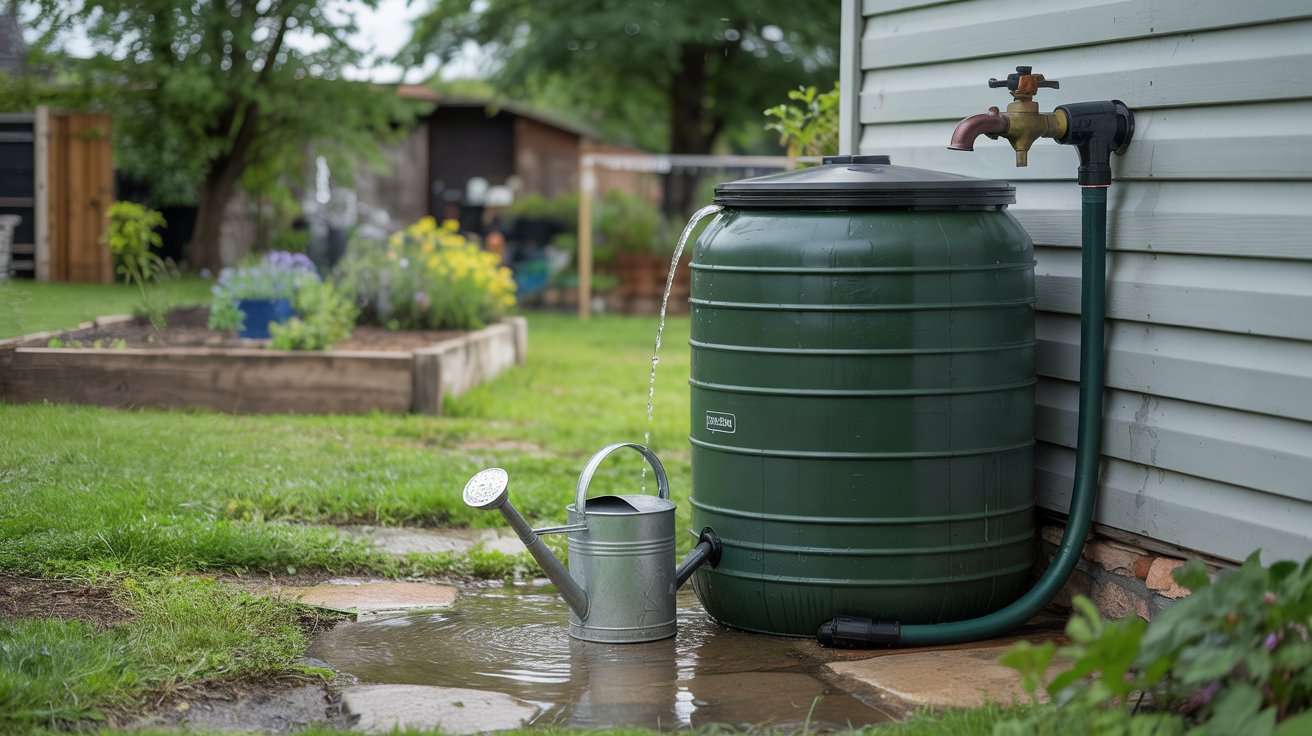
A rain barrel is one of the simplest tools you can add to a garden setup - cut the downspout, position the barrel, and you're collecting free water with every storm.
But walk into any hardware store or scroll through any retailer and you'll find barrels from 40 gallons to 200 gallons, prices from $30 to $300, and enough feature variations to make a straightforward purchase feel complicated.
This guide cuts through that.
We've mapped out the core decision criteria - capacity, material, spigot size, overflow routing, and downspout diverter compatibility - so you can match a barrel to your actual garden size and budget without second-guessing.
Whether you're watering a few raised beds or managing a full backyard plot, the right barrel is a function of your roof area and your rainfall, not just the price tag.
If you're also thinking about how your drip versus sprinkler setup will pull from collected water, that connection matters for sizing. We cover all of it below.
You'll walk away with a capacity-and-budget map, a clear install workflow, and a short list of scenario-specific picks you can buy today.
The best rain barrels store rooftop runoff for garden irrigation, reducing water bills and managing stormwater. According to the EPA rain barrel program, a standard barrel holds 50–60 gallons and connects directly to a downspout.
Price, material, and spigot quality separate budget picks from premium options.
What You Need to Decide Before You Buy?
Every rain barrel purchase comes down to five criteria: capacity, material, spigot size, overflow design, and diverter compatibility. Skip any one of these and you'll likely end up retrofitting the barrel within a season.
Remember it later
Planning to try this recipe soon? Save it for a quick find later!
The EPA rain barrel resource confirms that capturing roof runoff is practical for most homeowners - but the setup details determine whether it actually works long-term.
Capacity is the first filter. A 50-gallon barrel fills from roughly 1,000 square feet of roof during a one-inch rain event - more on the math in the next section.
If your garden is bigger than a few raised beds, you'll want to plan for linked barrels from the start, even if you only buy one now.
Material drives durability and safety. HDPE (high-density polyethylene) is the standard for good reason: it's UV-resistant, BPA-free, and holds up through freeze-thaw cycles better than thinner plastics.
Spigot sizing matters more than most buyers realize - a ¾-inch spigot fills a watering can in about 30 seconds, while a ½-inch fitting can take twice as long under low gravity pressure.
Overflow design is non-negotiable. Without a proper overflow outlet, excess water pools against your foundation.
Diverter compatibility determines whether you're cutting the downspout permanently or using a reversible connector - relevant if you rent or want to winterize easily. The Oregon State stormwater guide covers rainwater collection basics if you want more background on system planning.
| Criteria | What to Look For | Red Flag |
|---|---|---|
| Capacity | 50–100 gal for most yards | Under 40 gal fills too fast |
| Material | HDPE, UV-stabilized | Thin plastic, no UV rating |
| Spigot | ¾-inch brass or heavy plastic | ½-inch only, no hose thread |
| Overflow | Top or side outlet with hose fitting | No overflow port at all |
| Diverter | Reversible downspout kit included | Requires permanent downspout cut |
Price tiers map fairly directly to these features. Budget barrels under $60 typically handle capacity and basic overflow but cut corners on spigot quality and UV protection.
Mid-range options ($80-$150) add better spigots, diverter kits, and thicker walls. Premium barrels ($150-$300) often include decorative finishes, larger overflow ports, and pre-drilled linked-barrel connectors.
For most suburban gardens, the mid-range tier hits the best balance. If you're pairing your barrel system with a low-pressure drip setup, confirm the spigot threads match standard ¾-inch garden hose fittings before you buy.
Capacity, Price Bands, and System Scale
The rule of thumb for catchment is simple: one inch of rain on 1,000 square feet of roof yields roughly 600 gallons of runoff. A standard 50-gallon barrel, as noted by the UMD extension guide, fills completely during a moderate storm on even a small roof section.
That means a single barrel is a starting point, not a complete system, for most yards.
Knowing your roof's square footage helps set realistic expectations. A typical 1,500-square-foot ranch home can shed 900 gallons per inch of rain - enough to fill 15 standard barrels from a single event.
You won't store all of it, but positioning two or three barrels at different downspouts captures a meaningful share.
- 40-55 gallon barrels: Entry-level size, widely available, fills fast. Best for container gardens or a single raised bed.
- 65-80 gallon barrels: The practical sweet spot. Holds enough for 2-3 deep garden waterings before refilling. Fits most downspout setups.
- 100-200 gallon tanks: For large vegetable plots or frequent dry spells. Usually requires a platform or reinforced base due to weight.
The UF/IFAS extension shows that a basic DIY build kit can come in under $50 when you source a food-grade barrel and add your own spigot and overflow fittings. That's the floor of the budget tier.
Water weighs about 8.3 pounds per gallon, so a full 55-gallon barrel tips the scale at over 450 pounds. Position matters - once filled, it stays where it is.
Plan your base placement before the first rain, not after.
The EPA's catchment overview emphasizes that even modest storage reduces stormwater runoff from your property, which benefits both your garden and local drainage. Knowing your seasonal watering schedule helps you decide whether one barrel or four makes sense for your setup.

Materials, Features, and Add-Ons to Consider
HDPE plastic dominates the rain barrel market because it resists UV degradation, holds up in freezing temperatures, and doesn't leach chemicals into stored water.
Look for barrels labeled UV-stabilized - cheaper versions use untreated polyethylene that chalks and cracks within two or three seasons in direct sun.
BPA-free labeling matters if you're watering edibles, though the EPA notes that roof runoff safety is the bigger variable - asphalt shingles and treated wood can contribute trace contaminants. Use barrel water on roots and soil, not directly on foliage or fruit you eat fresh.
Spigot sizing directly affects how fast you can fill a can or connect a hose. Here's what to know:
- ½-inch spigot: Slow flow under gravity pressure. Works for hand-filling small cans, but frustrating for hose connections.
- ¾-inch spigot: Standard garden hose thread. Fills a 2-gallon can in under 30 seconds with the barrel elevated 12 inches.
- Dual spigots: Some barrels include a high spigot for hose attachment and a low drain spigot for winterizing. Worth the slight premium.
Overflow design separates well-engineered barrels from frustrating ones. A proper overflow outlet sits near the top of the barrel and connects to a hose or pipe that routes excess water away from your foundation.
Some barrels include a threaded port; others need an add-on fitting. The UF/IFAS build guide covers overflow fitting installation in detail if you're sourcing parts separately.
A barrel without a screened inlet is an open mosquito breeding site. Any gap larger than 1/16 inch in the lid or overflow port is enough. Check mesh quality before buying, or add a fine-mesh screen insert.
Built-in inlet screens keep debris and mosquitoes out. A fine mesh screen (at least 30-mesh) at the barrel opening is non-negotiable in warm climates.
Coarser screens let in enough to create problems within weeks.
Diverter kits are the final feature worth scrutinizing. A reversible downspout diverter lets you reconnect the original downspout in winter - no permanent cuts, no water damage risk when you take the barrel out of service.
For year-round or summer garden maintenance, a fixed diverter works fine. For seasonal use, spend the extra $15-$20 for a reversible model.
How to Install and Maintain a Rain Barrel?
Installation takes about an hour for a basic single-barrel setup. The main variables are your downspout material, base height, and overflow routing.
The UMD extension resource on downspout barrel connections walks through several configuration options if your downspout setup is unusual.
For a standard 55-gallon barrel on a flat surface next to a vinyl downspout, follow these steps:
Attach a soaker hose length directly to the ¾-inch spigot for slow, gravity-fed drip irrigation to nearby beds. No pump needed if the barrel is elevated at least 12 inches.

Planning by Garden Size, Climate, and Budget
Matching your barrel system to your actual conditions prevents both under-buying (running dry every dry week) and over-buying (200-gallon tank for six potted herbs).
The key inputs are roof area, local annual rainfall, and irrigation demand - all three together tell you how many barrels make sense and when they'll fill.
Climate drives the math hard. In the Pacific Northwest, even one 55-gallon barrel fills multiple times per week from October through April - overflow is the primary design concern.
In the Southwest, monsoon events deliver volume fast but infrequently, making large-capacity storage (100+ gallons) more valuable. The Oregon State stormwater planning resource covers regional rainfall considerations worth reviewing before scaling up.
The EPA notes that rain barrel systems build drought resilience at the property level - a real factor in regions with summer water restrictions. If your municipality restricts outdoor water use, stored rainwater from prior rain events is typically exempt.
For budget planning: start with one mid-range barrel and the correct diverter kit. Add a second linked barrel the following season once you know your fill rate.
This approach lets you compare watering costs before committing to a larger system. Pair with targeted tools for your garden - cut-resistant gloves make gutter and downspout work safer when you're on a ladder.
In USDA zones 3–5, plan to drain and store your barrel indoors or in a garage by late October. In zones 7–10, you can run the system year-round with only basic winter prep.
Top Picks by Scenario
Rather than recommending a single "best" barrel, these picks reflect three real buying situations. Each has a different priority - budget, space, or scalability - and each maps to a different barrel profile.
The UMD extension guide on 50-60 gallon barrel use confirms that standard consumer barrels handle most residential gardens without oversizing.
For small-space situations - a balcony, a narrow side yard, a single downspout feeding one raised bed - a slim-profile 40-gallon barrel with a flat back panel sits flush against a wall. These are harder to find but widely available online.
The UF/IFAS build approach on budget-conscious rain barrel builds is also worth a look if you want to customize fittings for a tight space.
- ¾-inch spigot threads to standard garden hoses without adapters
- Reversible diverter means no permanent downspout modifications
- Pre-drilled side ports allow linking a second barrel in under 20 minutes
- Thicker HDPE walls handle freeze-thaw cycles for 8–10 seasons
- Lower upfront cost — useful when testing a downspout location before committing
- Lighter empty weight makes repositioning easier during setup
- Easier to find at local hardware stores for same-day pickup
For anyone setting up gravity-fed drip irrigation, the mid-range linkable barrel is the clear choice - the ¾-inch spigot and elevated base work together without a pump. If you want to track all your garden tool investments in one place, the broader garden equipment overview covers watering tools alongside other seasonal gear.
And if your tool handles need attention after a season of outdoor use, reviewing how to restore tool edges keeps your whole setup in good shape.
Frequently Asked Questions
A 1,000 sq ft roof sheds roughly 600 gallons per inch of rain. Two linked 65-gallon barrels (130 gallons total) capture a practical share without overspending on storage.
Yes. Connect barrels at equal heights using a short linking hose through side ports. Water self-levels between them, doubling capacity without a second downspout tap.
They can if any opening is unscreened. A fine-mesh screen (30-mesh or finer) over the inlet blocks mosquito access. Check the overflow outlet too — it's a common entry gap.
No. Roof runoff picks up contaminants from shingles, bird droppings, and gutters. Use barrel water only for irrigation, not consumption — even with filtration.
Clean the inlet screen every 4–6 weeks, rinse the barrel interior once per season with diluted bleach, and drain fully before the first hard freeze to prevent cracked fittings.
Pin it for your next best rain barrel for garden use project.