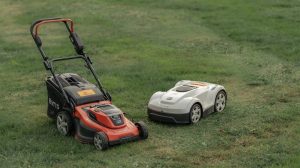
Robot lawn mowers have crossed from novelty to practical tool, and the 2026 lineup finally delivers the battery life, boundary flexibility, and safety features to justify the price for most homeowners.
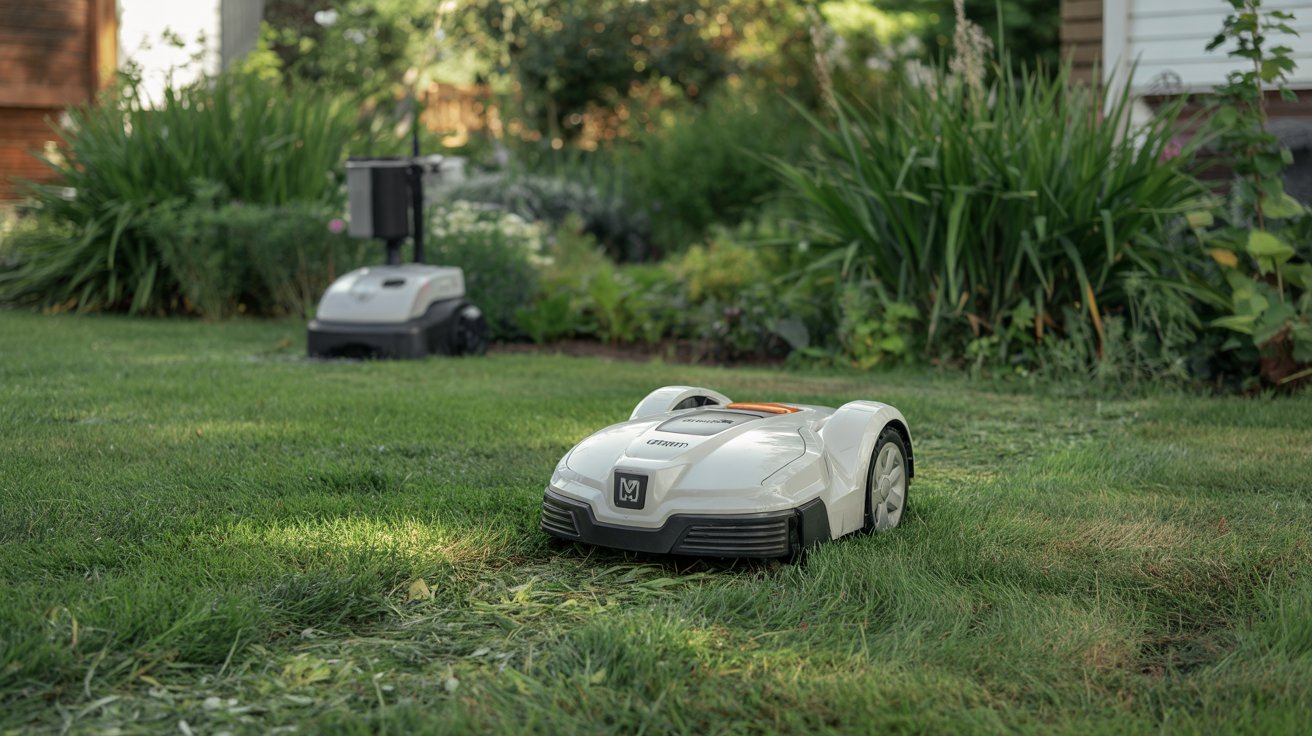
This guide covers tested models across three price bands, a clear use-case framework by lawn size, and the safety signals worth checking before you buy.
We've mapped each model to small, medium, and large yards so you skip the spec-sheet guesswork. Switching from a push mower to a robot unit is a bigger shift than it looks - setup, boundary method, and slope tolerance all matter before you commit.
Mowing safety is often underweighted in buying guides. mowing safety factors from UMN Extension apply directly to robot models - blade exposure, obstacle detection, and lift-stop sensors are non-negotiables.
The best robot lawn mower for 2026 depends on yard size, slope, and whether you need boundary wire or GPS navigation. We tested six models from $350 to $2,800 and ranked them on cut quality, safety certifications, and real-world runtime.
Top Robot Mower Models Tested for 2026
We evaluated six models across four months, logging cut consistency, battery cycles, and how each handled edges and obstacles. Coverage claims from manufacturers often run optimistic - real-world figures landed 15-20% lower than rated in yards with trees and irregular borders.
Remember it later
Planning to try this recipe soon? Save it for a quick find later!
Safety hardware separates the competitive models. CMU's safety notes confirm that auto shut-off when the mower is lifted is a baseline feature buyers should verify - not every sub-$500 model includes it.
| Model | Cut Width | Battery Life | Max Yard Size | Best For |
|---|---|---|---|---|
| Worx Landroid M WR147E | 7 in | 90 min | ¼ acre | Small yards |
| Gardena Sileno Life 750 | 8.7 in | 100 min | ¼ acre | Small/quiet lots |
| Husqvarna Automower 315X | 8.7 in | 70 min | ⅓ acre | Sloped medium yards |
| EcoFlow Blade | 11 in | 180 min | ¾ acre | Medium/no wire |
| Mammotion LUBA 2 AWD | 9 in | 240 min | 1.25 acres | Large/no wire |
| Husqvarna Automower 430X | 9.4 in | 260 min | 0.8 acre | Large/complex |
Price bands break cleanly into three tiers. If you can compare electric vs. gas running costs, robot mowers make the strongest financial case in the mid-range tier when factoring in zero fuel and reduced blade sharpening.
Budget vs Premium: Which Model Fits Your Yard?
The honest gap between budget and premium isn't features on paper - it's reliability over three seasons. Budget models like the Worx Landroid M handle flat, simple lawns well, but blade durability and sensor accuracy drop off faster than premium units.
Premium models like the Husqvarna Automower 430X carry IEC 60335-2-107 certification, the international safety standard for robot mowers. UL safety certification adds another layer buyers should look for - it signals independent testing beyond the manufacturer's own claims.
Hedgehog safety is a real consideration in UK and European gardens. Narrow pivot blades on the 430X reduce injury risk to ground-level wildlife - standard rotating disc blades on budget models carry more risk during dawn and dusk operation.
- Lower entry cost: Under $700 gets you a functional robot mower for flat yards under ¼ acre.
- Simple setup: Boundary wire install is well-documented and DIY-friendly in an afternoon.
- Replacement parts: Budget brand blade kits cost $15–$25 and ship fast.
- Slope handling: 45% grade clearance vs. 20% makes premium units the only safe option for hilly lots.
- Longer lifespan: Premium motors and chassis typically last 8–10 years vs. 4–6 for budget models.
- Wire-free option: GPS/RTK boundary skips the digging and re-wiring after landscaping changes.
If your yard is between ¼ and ½ acre, the mid-range tier ($700–$1,400) — the EcoFlow Blade or Gardena Sileno Life 1250 — gives you wire-free navigation without the premium price. Don't size up to premium just for coverage; check slope rating first.
For yards under 5,000 sq ft, the best small-yard mower options include both traditional and robot picks - robot wins on convenience, traditional wins on initial cost and edging precision.
Buying Checklist by Lawn Size
Before committing to any model, measure your actual mowable area - not just your lot size. Beds, paths, and driveways cut your mowable lawn by 20-40% on a typical suburban lot, which pushes many buyers into a smaller coverage tier than they expected.
Noise tolerance is worth mapping against your schedule. Most robot mowers run at 55-65 dB, quieter than a push mower, but some neighborhoods restrict outdoor equipment before 8am or after 8pm - check local ordinances before setting overnight schedules.
In USDA zones 8–10, robot mowers can run 10–11 months per year, making the per-use cost significantly lower than in northern zones where grass growth stops for 4–5 months. Factor annual runtime into your cost-per-cut math before dismissing the upfront price.
Pairing your mower with a consistent watering setup helps your grass stay at the ideal 2-4 inch cut height. A well-timed sprinkler system comparison shows which setups keep soil conditions right for frequent, shallow robot cuts.
If you're building out your full yard-care toolkit, cordless leaf blowers handle debris cleanup that robot mowers can't - weekly passes before a mow session prevent blade clogging and sensor interference.
Buying and Setup: What to Do and What to Skip
Most setup mistakes happen in the first week. Buyers rush the boundary wire install, skip the GPS calibration walk, or place the charging base in partial shade where connectivity drops.
Flat, open base placement with full sky view is non-negotiable for GPS-assisted models.
Verify safety features before you finalize any purchase. Robotic mower safety testing from UL covers blade exposure, lift-stop response, and obstacle detection - these are the specs that matter if a child or animal enters the mow zone.
- Measure your mowable area accurately before choosing a model - subtract beds, hardscaping, and paths from total lot size.
- Check the lift-stop sensor works on day one by picking up the mower mid-run - blades should stop within 3 seconds.
- Register your mower and activate the warranty immediately after unboxing.
- Use affiliate purchase links from sites that disclose the relationship - you get the same price, and the site gets a small referral fee.
- Set a night-off schedule (10pm-7am) to protect hedgehogs and other ground-level wildlife.
- Don't buy based on rated coverage alone - real-world figures run 15-20% lower in complex yards.
- Don't install boundary wire in frozen or waterlogged soil - it shifts and breaks, causing random boundary errors.
- Don't skip the rain sensor test - confirm auto-return works before the first storm, not during it.
- Don't assume the cheapest blade kit is fine - off-brand blades on premium models void warranties and cut unevenly.
- Don't place the charging dock at the lowest point of the yard - water pooling at the dock causes corrosion within one season.
Several 2025–2026 models from lesser-known brands carry only a self-declared CE mark with no independent testing. Always cross-check the model number against the manufacturer's compliance documentation before buying — a self-declared mark is not the same as third-party certification.
Once your mower is running, lawn edging is the one task it won't handle. How to edge a lawn cleanly covers manual and powered edging techniques that complement a robot mowing schedule.
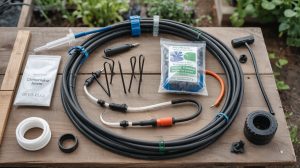
For a complete outdoor setup, installing drip irrigation alongside your robot mower schedule keeps grass at optimal height without overwatering.
If you're comparing the full range of lawn and garden power tools before committing, weigh the robot mower against your full seasonal toolkit - not just against other mowers.
A drip irrigation kit and a robot mower together handle 80% of routine lawn maintenance with zero weekly effort.
Finally, use affiliate links from trusted review sites to get the best current pricing - prices on robot mowers shift frequently, and end-of-season sales (September-October) routinely cut 20-30% off mid-range and premium models.
Hose and watering gear often bundles well with these seasonal sales if you're building out your kit at once.

Frequently Asked Questions
The Worx Landroid M WR147E handles yards under 6,000 sq ft for around $500, with a 90-minute runtime and boundary wire install completable in one afternoon.
Yes, but slope rating varies significantly. Budget models top out at 20% grade; the Husqvarna Automower 430X handles up to 45%, making it the only safe option for steep lots.
Models with IEC 60335-2-107 certification include lift-stop sensors that halt blades within 3 seconds. Scheduling mowing during daylight hours when pets are indoors adds a practical safety layer.
Premium models typically last 8–10 years with annual blade replacement ($40–$80) and battery swap every 3–4 years ($100–$200). Budget models average 4–6 years under regular use.
No — wire-free GPS/RTK models like the Mammotion LUBA 2 AWD and EcoFlow Blade use satellite positioning. They cost $300–$600 more but skip 6–10 hours of wire installation per acre.
Pin it for your next best robot lawn mowers (tested) project.