Mowing season arrives fast, and the choice between a gas or electric lawn mower shapes every session from spring through fall. Power, run time, noise, emissions, and annual cost all differ significantly between the two - and the wrong pick wastes money and patience.
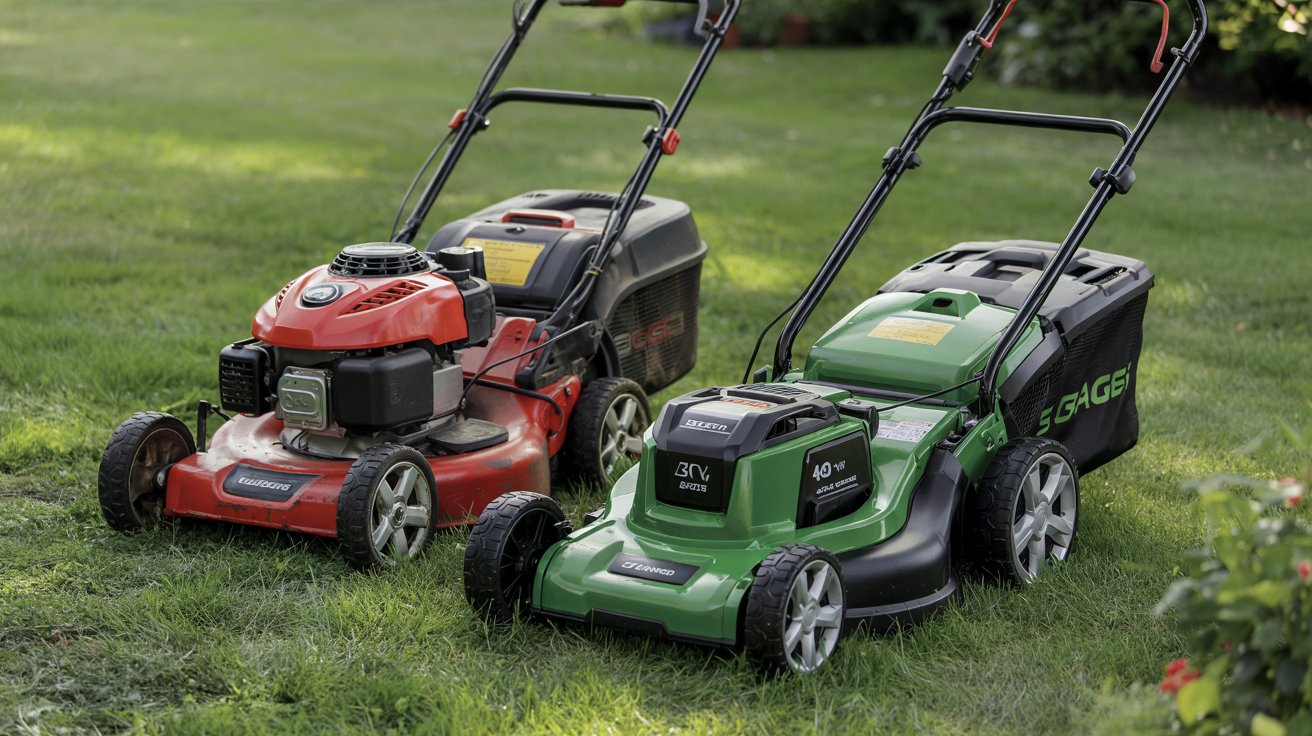
Electric mowers have closed the performance gap fast over the last five years. Battery technology now delivers run times that cover most residential yards on a single charge, and mowers built for small yards have gone almost entirely cordless.
Gas mowers still dominate for large, rough, or heavily sloped properties where raw power and unlimited run time matter more than quiet operation or emissions.
This guide lays out an honest, data-backed verdict for each scenario - lawn size, terrain, budget, and how much maintenance you're willing to do - so you can choose with confidence rather than guesswork.
For yards under half an acre on flat terrain, a battery-powered electric mower handles the job cleanly, cheaply, and quietly. Gas wins on large or uneven lots where continuous run time and torque still matter.
Electric emits roughly 1 lb CO₂ per acre versus 14 lbs for gas.
Verdict: Gas vs Electric
For most suburban homeowners with a yard under half an acre, an electric mower is the practical choice.
Remember it later
Planning to try this recipe soon? Save it for a quick find later!
It starts every time, costs less to run annually, and produces far lower emissions - DOE emissions testing confirms electric mowers offer significantly safer operation with reduced noise and no on-site fuel handling.
Gas mowers still hold the advantage on larger properties, particularly where thick grass, slopes, or extended mowing sessions demand uninterrupted power. A gas tank refills in two minutes; a battery needs hours.
Here's a fast rubric to apply before you buy:
- Yard under ¼ acre, flat: Electric walk-behind handles this without question. Single charge is enough for one full session.
- Yard ¼ to ½ acre, mostly flat: Electric still works well. Look for a 60V or higher battery system to guarantee full coverage.
- Yard over ½ acre or hilly: Gas is the safer call. Run time and torque give you room to finish without stopping.
- Thick or overgrown grass: Gas engines handle load fluctuation more consistently than most battery motors at this price point.
- Noise-sensitive neighborhood or early morning mowing: Electric wins outright. Gas mowers exceed 90 dB; electric typically runs 75 dB or below.
- Low maintenance tolerance: Electric requires no oil changes, no spark plugs, and no carburetor cleaning - it's the clear pick if you want minimal upkeep.
The emissions gap is significant. According to Illinois energy data, gas mowers emit roughly 14 lbs of CO₂ per acre mowed, while electric mowers emit around 1 lb per acre - a 14-to-1 difference that compounds over a full season.
A good lawn care schedule pairs naturally with whichever mower you choose - but your mower type affects how you plan fueling or charging windows across the season.
Performance and Suitability by Lawn Size
Run time and area coverage are the two numbers that matter most when matching a mower to your yard.
Electric walk-behind models now routinely deliver 45 to 50 minutes per charge, which covers most flat yards under half an acre in one pass, according to Washington Post testing.
Gas mowers win on sheer coverage potential, but the efficiency gap is smaller than most people expect.
Illinois energy research puts a typical electric mower at 16 acres per full charge across its battery cycle, while gas covers roughly 14 acres per full tank - a mild advantage for electric in pure efficiency terms.
Terrain changes the math quickly. On slopes above 15 degrees or in thick, damp grass, gas engines maintain consistent blade speed under load better than most mid-range battery motors.
If your yard is flat and dry when you mow, electric keeps pace without compromise.
Charging logistics also shape the decision. A typical recharge takes around 2 hours and 20 minutes for a walk-behind model.
That's a non-issue for weekly mowing, but a real inconvenience if you need to do multiple passes in a single day. You can pair your mower with a cordless blower for cleanup after - most battery platforms share chargers across tools, cutting equipment costs overall.
| Yard Size / Type | Gas Mower | Electric Mower |
|---|---|---|
| Under ¼ acre, flat | Works; overkill | Single charge, ideal |
| ¼–½ acre, flat | Works fine | One charge covers it |
| ½–1 acre, mixed | Best fit | May need second charge |
| 1+ acre or hilly | Recommended | Multiple charges needed |
| Thick/tall grass | Consistent torque | Varies by battery voltage |
| Charging/refuel time | ~2 min (fuel) | ~2 hrs 20 min |
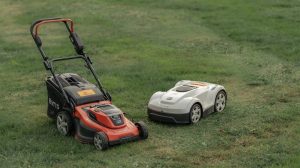
For very small lots, electric is so well-suited that autonomous robot mowers are now a genuine alternative - they run on battery too, and handle flat, regular-shaped lawns with no effort from you at all.
Maintenance and Running Costs
Gas mowers demand consistent upkeep. Oil changes, spark plug replacements, air filter swaps, and occasional carburetor cleaning are standard annual tasks - skip them and the engine performance degrades noticeably.
Annual gas maintenance typically runs $50-$150 in parts alone, before labor.
Electric mowers shift nearly all of that effort away. Battery care is the primary job: avoid deep discharge, store in a dry space above freezing, and replace the pack every few years.
Replacement battery packs cost $100-$300 depending on the brand and voltage, which is the main long-term cost to plan for.
University of Illinois extension research confirms that battery-powered lawn tools require less frequent maintenance overall and translate their efficiency advantage into lower average energy bills versus gas.
Over a five-year window, an electric mower typically saves $200-$400 in fuel and maintenance compared with a comparable gas model - though battery replacement narrows that margin.
Choosing a brand with a strong battery ecosystem, like those that also power a quality string trimmer, spreads the battery investment across multiple tools and improves overall value.
If you buy electric, match your mower to your string trimmer and blower brand. Sharing one battery platform across three tools can cut your total battery spend by 30–40%.
Decision Rubric and Real-World Considerations
The decision comes down to four variables: yard size, terrain, noise tolerance, and fueling logistics. Run through each one and the right mower becomes obvious.
- Yard size under ½ acre: Electric is the practical default. Most battery mowers handle this comfortably on a single charge, and the lower cost of operation adds up quickly.
- Yard over ½ acre or heavily sloped: Gas is the safer long-term choice. Consistent torque and instant refueling keep you moving without downtime.
- Noise and air quality matter: Electric mowers produce roughly 15 dB less noise than gas and emit no exhaust at point of use - a clear advantage in noise-restricted neighborhoods or enclosed areas.
- Winter charging and fuel storage: Gas requires proper fuel stabilization and safe storage containers over winter. Electric needs only an indoor, above-freezing battery storage location.
- Budget under $300: Entry gas mowers are available at this price; entry electric models also exist but may have shorter battery life. Plan for battery replacement cost within 3-5 years.
- Prioritizing low emissions: The CO₂ gap is hard to ignore - gas emits about 14 lbs per acre versus roughly 1 lb for electric, as documented in Illinois IDNR equipment data. Over a 10-year ownership period on a quarter-acre lot, that difference is substantial.
In colder climates, battery performance drops noticeably below 40°F — electric mowers may lose 15–20% run time on cold spring mornings. Gas mowers are unaffected by temperature within normal seasonal ranges.
Seasonal accessibility is underrated as a factor. Gas requires a fuel source year-round, which means storage cans, potential evaporation, and stabilizer costs if you're mowing infrequently.
Electric simply charges from your standard outlet overnight - no trips to the gas station, no fumes in the garage.
If you're also deciding between automated options, robotic versus push mower comparisons show that for very small, defined yards, robot mowers often undercut both gas and electric walk-behinds on long-term cost per mow.
The DOE Portsmouth emissions study reinforces that electric mowers meaningfully reduce on-site air quality impact - a factor worth weighing if you mow near play areas, gardens, or neighbors' windows.
For a fuller picture of outdoor power tools in the same battery ecosystem, our lawn and garden equipment guides cover the full range of cordless options by category.
Finally, don't overlook water system costs when budgeting your yard setup - resources like sprinkler installation cost breakdowns and comparisons between drip irrigation and sprinkler systems round out the full picture of annual yard operating costs beyond mowing.
Pairing the right lawn sprinkler setup with an efficient mowing routine keeps your total yard maintenance budget predictable.
Don't buy a budget electric mower for a yard at the upper edge of its rated coverage area. Manufacturers rate capacity under ideal conditions — real-world thick grass or slight slopes can cut rated run time by 20–30%.

Frequently Asked Questions
Yes, for most mid-range price points. Gas engines maintain consistent blade speed under heavy load better than battery motors, making them more reliable in dense or overgrown grass.
Most walk-behind electric mowers deliver 45–50 minutes per charge. A full recharge typically takes around 2 hours and 20 minutes, depending on the battery pack size.
Upfront costs are comparable — both start around $250–$300 for entry models. Electric saves $200–$400 over five years in fuel and maintenance, though battery replacement ($100–$300) narrows the gap.
Gas requires annual oil changes, spark plug replacements, and air filter swaps. Electric needs only battery care and blade sharpening — significantly less time and fewer parts annually.
Electric mowers can handle yards up to roughly half an acre on a single charge. On steep slopes or yards over half an acre, gas remains the more reliable choice for uninterrupted coverage.
Pin it for your next gas vs electric lawn mower project.